Shoulder / Elbow / Wrist Pain
-
Shoulder Pain
The shoulder is a large and complex synovial ball-and-socket joint located between the head of the humerus (upper arm bone) and the glenoid cavity (articular surface) of the scapula. The shoulder complex is made up of three bones: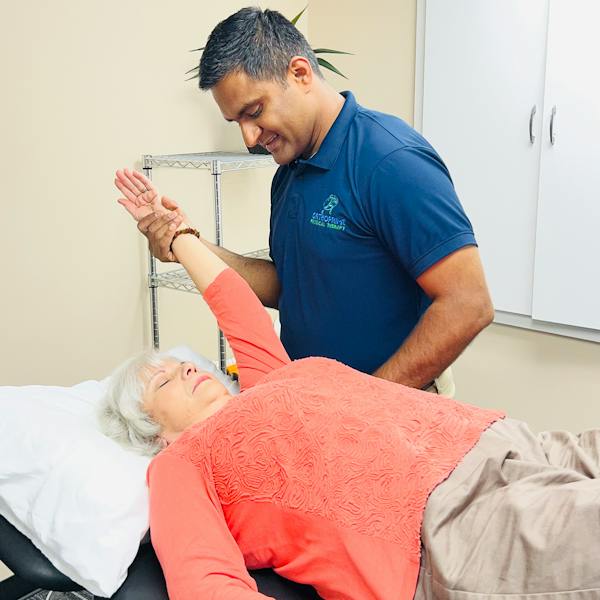
- Humerus - held in place within the glenoid cavity by the long head of the bicep tendon and reinforced by the rotator cuff.
- Scapula (shoulder blade) - the shoulder (pectoral) girdle bone that has a prominent ridge and two concave areas (supraspinous and infraspinous fossae). The top outer edge of the scapula is called the acromion. It is a sideways extension of the backbone on the shoulder blade that forms the acromioclavicular joint together with the clavicle.
- Clavicle (collarbone) - a curved, horizontal, S-curved, rod-shaped bone located at the base of the neck in the front (anterior) part of the body.
- Glenohumeral (GH) - a true synovial ball-and-socket style diarthrodial (freely moving) joint that connects the upper extremity to the trunk.
- Acromioclavicular (AC) - a gliding (plane style) synovial joint that connects the sternum with the clavicle.
- Sternoclavicular (SC) - a saddle-type synovial joint (sometimes known as a double-plane joint) located where the clavicle (collarbone) meets the sternum (breastbone) at the base of the neck.
- Scapulothoracicic (ST) - not a true anatomical joint but rather a "floating joint" that is an articulation (joint or juncture between bones or cartilages) of the scapula with the thorax.
More on the Glenohumeral Joint
The glenohumeral joint is the main shoulder joint. It is the most mobile of any joint in the body and the most unstable. It is the most commonly dislocated joint in the shoulder. Watch the video below to learn more.Common Shoulder Disorders
The shoulder is extremely flexible and mobile. But, with that mobility comes vulnerability. The three ball-and-socket joints within the shoulder are vulnerable to the same conditions as other synovial joints in the body. The most common conditions are instability due to injury, osteoarthritis, infection and rheumatoid disease. The floating ST joint is vulnerable to such painful conditions as:- Scapular Winging - lateral scapular winging, medial scapular winging and pseudo-winging are caused by the trapezius (serratus anterior) failing to stabilize the scapula.
- Snapping Scapula Syndrome - a grating sensation often caused by overuse and scapulothoracic bursitis.
- Scapulothoracic Dyskinesis - abnormal scapula motion that disrupts the normal glenohumeral joint mechanics and leads to shoulder pain.
- Scapulothoracic Dissociation - a disruption of the ST joint associated with high-energy trauma.
- Fracture - Fractures (broken bones) commonly occur in the clavicle (collar bone), proximal humerus (top of the upper arm bone), and scapula (shoulder blade).
- Dislocation - when the bones on opposite sides of a joint do not line up. Dislocations occur in any of the three ball-and-socket shoulder joints: glenohumeral, acromioclavicular, or sternoclavicular.
- Acromioclavicular (AC) Separation - an AC separation is also known as a separated shoulder. It is often caused by a fall or hard blow that tears ligaments that surround and protect the joint where your collarbone and shoulder blade come together.
- SLAP Tear - a Superior Labrum, Anterior to Posterior (SLAP) tear is also known as a labrum tear or cartilage tear. It is a tear in the lining of the shoulder socket rim that deepens the shoulder joint socket, which creates a stronger fit for the head of the humerus. It can be caused by overuse or a traumatic injury.
- Rotator Cuff Tear - an injury to the group of muscles and tendons in your shoulder that hold your arm in place and let you lift your arm overhead, caused by overuse, a traumatic injury, or wear and tear as you age.
- Frozen Shoulder - abnormal bands of tissue (adhesions) build up in the joint, causing the shoulder to stiffen ("freeze") due to pain or surgery.
- Impingement - the rotator cuff gets pinched between the shoulder bones, which can cause pain and swelling.
- Bursitis - inflammation or irritation of the fluid-filled sac (bursa) in your shoulder that causes pain and swelling, especially when you move your shoulder.
- Tendinitis - tiny tears in one or more tendons in your shoulder that can cause pain and swelling and make it difficult to move. Tendinitis is usually caused by repetitive or overuse of the shoulder or by a sudden traumatic injury, such as a sports injury, sudden fall, or automobile accident.
- Tendinopathy/Tendinosis - although the symptoms are similar to tendinitis, tendinopathy/tendonosis is a different condition. It is the degeneration of the collagen protein that forms the tendon caused by a combination of repetitive use, poor blood supply to the distal (outer) end of the tendon, and age-related degenerative change.
Physical Therapy for Shoulder Pain
The good news is that many shoulder injuries and conditions can be treated conservatively. Our physical therapists (PTs) are experts in the art and science of evaluating and treating shoulder dysfunctions (abnormalities). We care for people of all ages and successfully treat a variety of muscle, ligament, tendon, joint, and neurological conditions. Components of your care typically include:- A thorough biomechanical evaluation.
- Customized treatment plan.
- Extensive patient education.
- Hands-on techniques to relax the muscles and recover mobility.
- Stretching for tight muscles.
- Strengthening of weak muscles.
- Mobilization of stiff joints.
- Modalities such as ice, heat, ultrasound or electrical stimulation.
Advantages of Physical Therapy:
- No side effects.
- Cost-effective.
- Supported by clinical research*.
- Customized to treat the underlying cause.
-
Elbow Pain
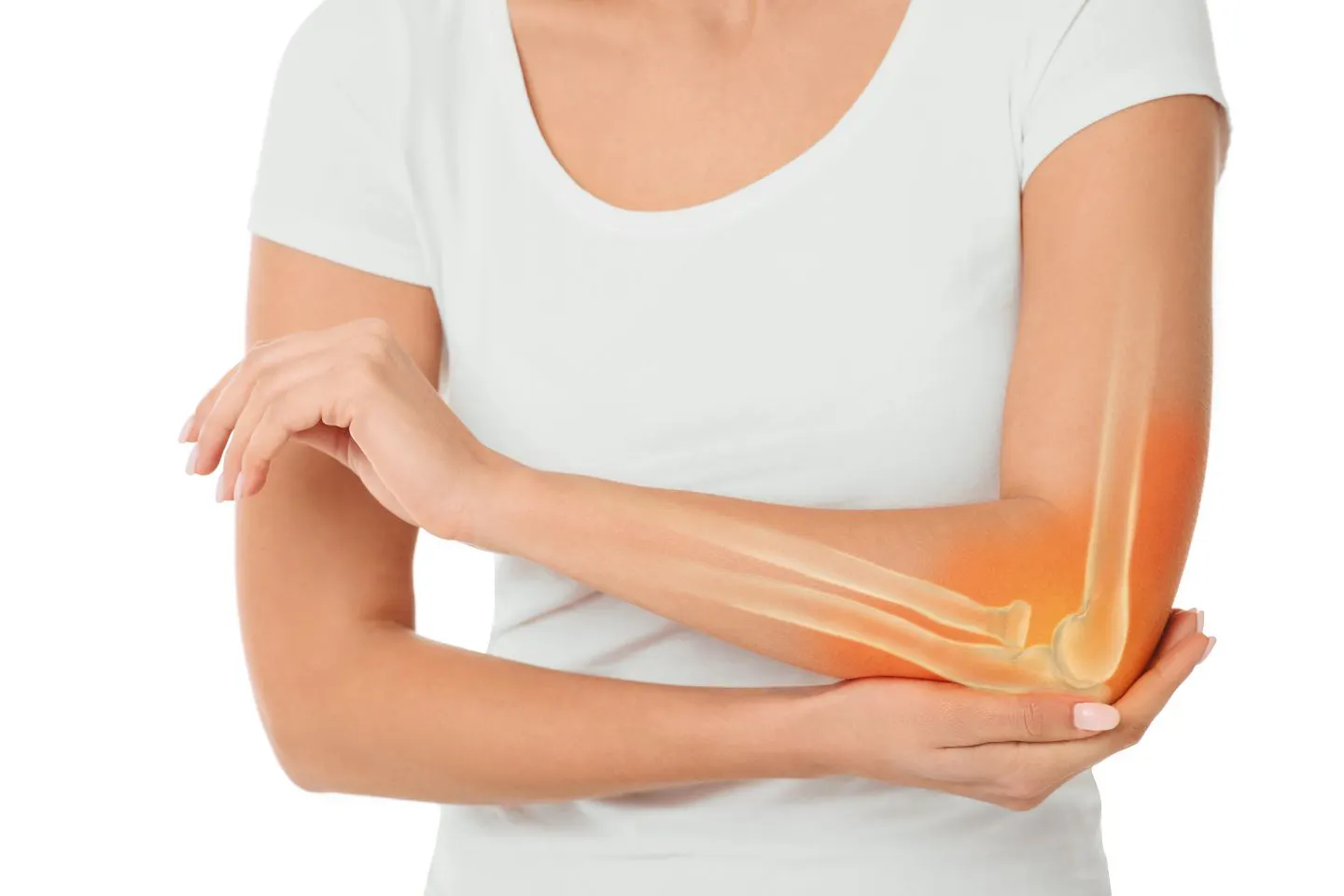
The elbow is a joint formed by three bones that come together:- Upper arm bone (humerus)
- Thinner and longer of the two bones in the forearm (ulna)
- Shorter and thicker bone in the forearm (radius)
What causes elbow pain?
Elbow pain is typically caused by overuse and sports injuries. The following are some conditions that can cause elbow pain:- Medial Epicondylitis (Golfer's Elbow) - tendinopathy of the inner tendons in the elbow commonly caused by repetitive movements resulting from work or household chores, a baseball pitcher's repetitive throwing motion and golfer's downward swing of a golf club.
- Lateral Epicondylitis (Tennis Elbow) - tendinopathy of the tendons on the outside of the elbow commonly caused by repetitive movements resulting from household chores, racquet sports and certain occupations.
- Olecranon Bursitis (Student's Elbow, Miner's Elbow, Draftsman's Elbow) - inflammation of the small sacs of fluid (bursae) that help protect the pointed elbow bone typically caused by trauma (e.g., falling on the elbow or hitting it on a hard surface).
- Osteoarthritis (OA) - damage and deterioration of the cartilage (connective tissue in the joints) typically age-related but can also be due to a previous injury (e.g., elbow fracture).
- Elbow Strain - over-stretched or torn forearm flexor or extensor muscles typically caused by trauma or overuse.
- Elbow Sprain - over-stretched or torn ligaments (band of tissue that connects bone to bone) that can result from trauma or overuse.
- Elbow Dislocation - a bone moves from its usual position commonly caused by catching yourself during a fall or when you swing a toddler by the forearms (nursemaid's elbow).
- Elbow Fracture - when a bone cracks or breaks typically resulting from a sudden blow (e.g., an auto accident or contact sports injury).
- Osteochondritis Dissecans (Panner's Disease) - small pieces of cartilage and bone become dislodged in the elbow joint typically resulting from a sports injury.
Physical Therapy for Elbow Pain
Our therapy services are provided by experienced and skilled physical therapists. We work one-on-one with patients using compassion, creativity, and advanced therapy techniques, in a comfortable environment, to help patients achieve their goals and restore function. Individually designed therapy programs are carefully developed for patients with injuries and/or medical conditions related to the elbow. Physical therapy treatment for elbow pain may include:- Evaluation (pre- and post-op)
- Splints (custom & prefabricated)
- Patient/Family Education
- Written Home Programs
- Wound Care
- Kinetic Taping
- Thermal and Electrical Modalities
- Strength & Endurance Training
- Injury Prevention Programs
- Scar and Pain Management
- Edema Control
- Manual Therapy Desensitization
When to See a Doctor for Elbow Pain
Elbow pain is typically short-term and not a cause for concern. These can usually be treated with rest, ice therapy, medication and physical therapy. However, if you are experiencing these symptoms, it would be a good idea to consult with an orthopedic doctor.- Your elbow doesn't improve after treating with rest and ice therapy.
- Your elbow is painful even when you aren't using your arm.
- Pain, redness or swelling continues to get worse instead of better.
- You are not able to move your elbow or arm normally.
- Normal, everyday activities are painful or becoming more difficult to do.
- Your elbow is intensely painful and has bruising and swelling around the joint.
- You notice an obvious deformity in your elbow.
- You are unable to move your able.
- Your elbow starts hurting following an injury or fall.
-
Wrist Pain
The wrist is also called the carpus. It is a complex joint between five metacarpal bones of the hand and the wrist (radiocarpal), which is joint between the radius (shorter of the two forearm bones on the thumb side of the arm) and ulna (longer of the forearm bones on the thumb side of the arm) bones of the forearm.What causes wrist pain?
Wrist pain can be caused by sprains or fractures from a fall or other sudden injury. It can also be caused by chronic issues, such as repetitive stress, arthritis and carpal tunnel syndrome. Ulnar wrist pain and Radial wrist pain are usually caused by a scapholunate ligament sprain, partial tear or complete tear typically resulting from a fall onto an outstretched hand (FOOSH). Other common causes of wrist pain include:-
- Tumors including Glomus Tumor, Ganglion Cyst, Osteochondroma
- Carpal Instability
- Distal Radius Fracture (a fracture at the end of the radius bone near the wrist joint)
- Carpal Tunnel Syndrome
Physical Therapy for Wrist Pain
You may be referred to physical therapy for conservative care of acute or chronic symptoms. People are also referred before surgery for pre-operative (pre-surgical) therapy and/or post-operative (post-surgical) therapy to help with recovery and return of function. If you are referred for therapy, remember that you can choose where you get your care even if the referring physician refers you to another therapy practice. Choose us for your wrist therapy needs. Visit our Medical Library for more information on wrist pain. -